
Hume Band 2.0 vs Google Fitbit Air
The difference between counting your steps and reading your health. Fitbit Air counts what you did today. Hume Band 2.0 reads what your body is doing to itself over years.
By Ryan Cole | Health-tech reviewer
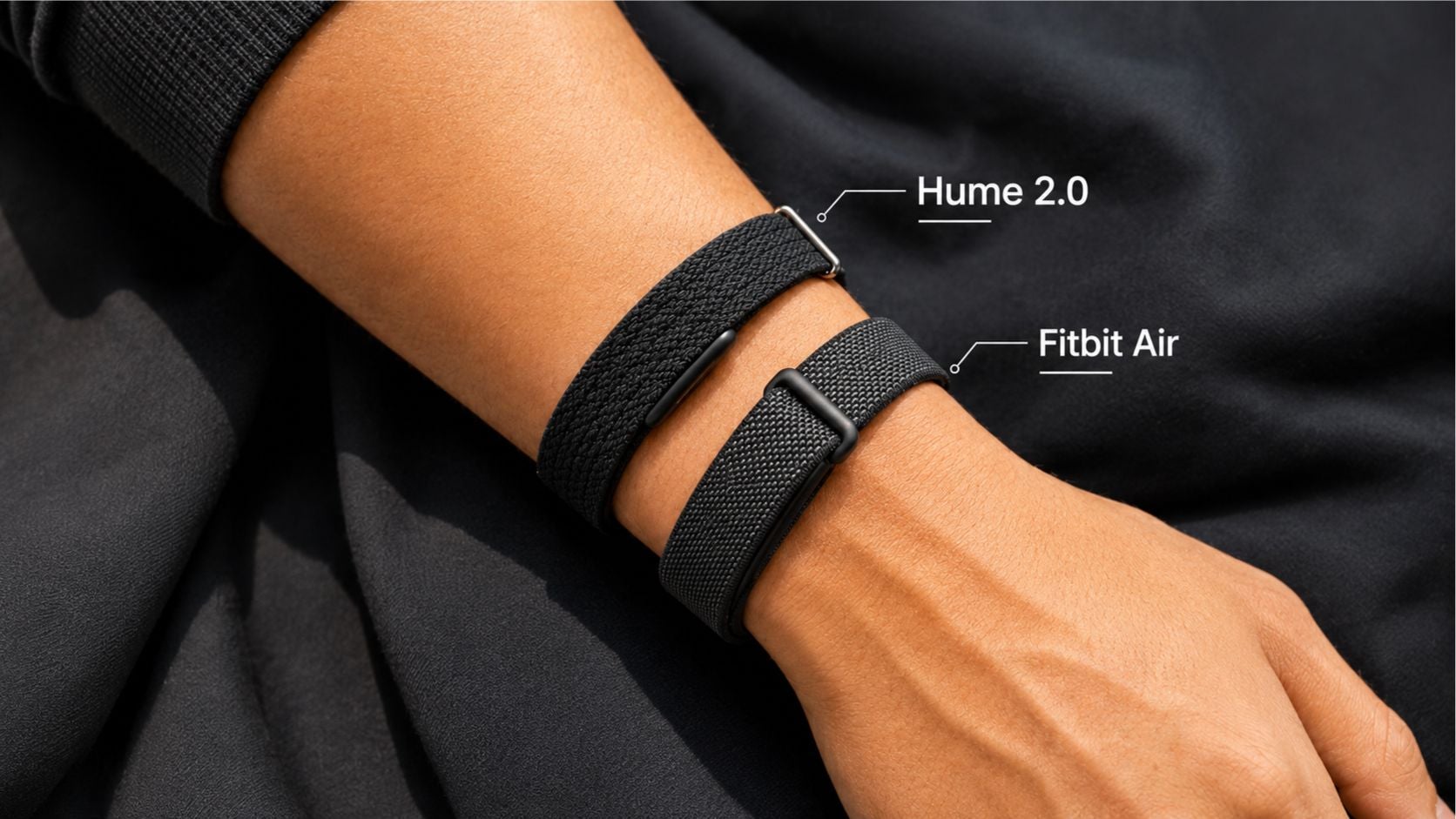
Most wearables tell you what you did today. Hume Band 2.0 shows how well you are aging.
Steps, workouts, last night's sleep. That is what trackers like Hume Band 2.0 and Google Fitbit Air are good at.
Google Fitbit Air tracks heart rate and HRV around the clock, sleep, SpO2, skin-temperature variation, and AFib alerts. With up to 7 days of battery life, it is a strong and accessible pick for keeping tabs on everyday wellness.
But daily steps and surface-level metrics alone do not show how your metabolic health, recovery, or biological age are changing over time.
Hume Band 2.0 tracks daily activity too. But it is built to go further.
Hume Band 2.0 is a longevity wearable built for long-term health tracking. It organises your data into clear insights such as Metabolic Capacity, Heart Resilience, Biological Age, and Pace of Aging.
Instead of only showing your daily activity, it helps you understand how your health is changing over time.
There is also a difference in what stays affordable. Fitbit Air’s advanced coaching is free for 3 months, then you have to pay for it. Hume Band 2.0 keeps its core longevity insights free in the app..
Which Fitness Tracker Fits Your Health Goals?
Hume Band 2.0
Longevity & Health Patterns — a longevity wearable that organises your signals into a clearer view of aging, metabolic health, and resilience over time.
- Metabolic Capacity and Metabolic Momentum
- Biological Age and Pace of Aging
- Heart Resilience read from HRV over time
- Continuous heart rate, SpO₂, skin temperature
- Sleep stages, strain, and recovery status
- Blood-pressure insights and trends
- Early pattern awareness for unusual strain
- Core metrics free in app; AI coaching on Premium
- Up to 14 days battery, 5 LEDs and 4 photodiodes
Google Fitbit Air
Everyday Health & Fitness — an accessible, lightweight tracker for staying on top of daily wellness, all in the Google Health app.
- 24/7 heart rate and heart-rate variability
- Activity, workouts, and auto exercise detection
- Heart-rhythm monitoring with AFib alerts
- Up to 7 days battery, 5-minute charge for a day
- Advanced coaching is only free for 3 months
- Ongoing coaching requires Google Health Premium
- Less focus on long-term longevity insights
The split is everything downstream of that signal. Fitbit Air resolves it into a daily activity log: how far you moved, how hard your workout was, how you slept.
Hume Band 2.0 resolves the same signal into a metabolic, cardiovascular, and longevity picture, and that picture sharpens with every additional week of wear.
Hume Band 2.0
Health Intelligence
A longevity wearable built around metabolic health and long-term body awareness. Every metric points at trajectory, not just today.
✓ Metabolic Capacity plus Metabolic Momentum
✓ Biological Age and Pace of Aging
✓ Heart Resilience tracked from HRV over time
✓ Continuous heart rate, HRV, SpO2, respiratory rate
✓ Sleep stages mapped to recovery and readiness
✓ Skin-temperature trend tracking, day and night
✓ An overall Health Score from multiple biomarkers
✓ Core metrics free in the app, no subscription to read your data
✓ 5 LEDs and 4 photodiodes sampling more often than most bands
Both devices start from nearly the same hardware. Each carries an optical heart-rate reader, motion sensors, and red and infrared light for blood oxygen.
Photoplethysmography, the technique of bouncing light off the blood under your skin to read pulse and oxygen, is doing the underlying work in both bands. The raw signal is close to identical.
The split is everything downstream of that signal. Fitbit Air resolves it into a daily activity log: how far you moved, how hard your workout was, how you slept.
Hume Band 2.0 resolves the same signal into a metabolic, cardiovascular, and longevity picture, and that picture sharpens with every additional week of wear.
5 Hume Band 2.0 Features That Go Beyond Steps And Sleep
1.
Hume Band 2.0 includes a Chronic Illness Indicator. Fitbit Air does not.
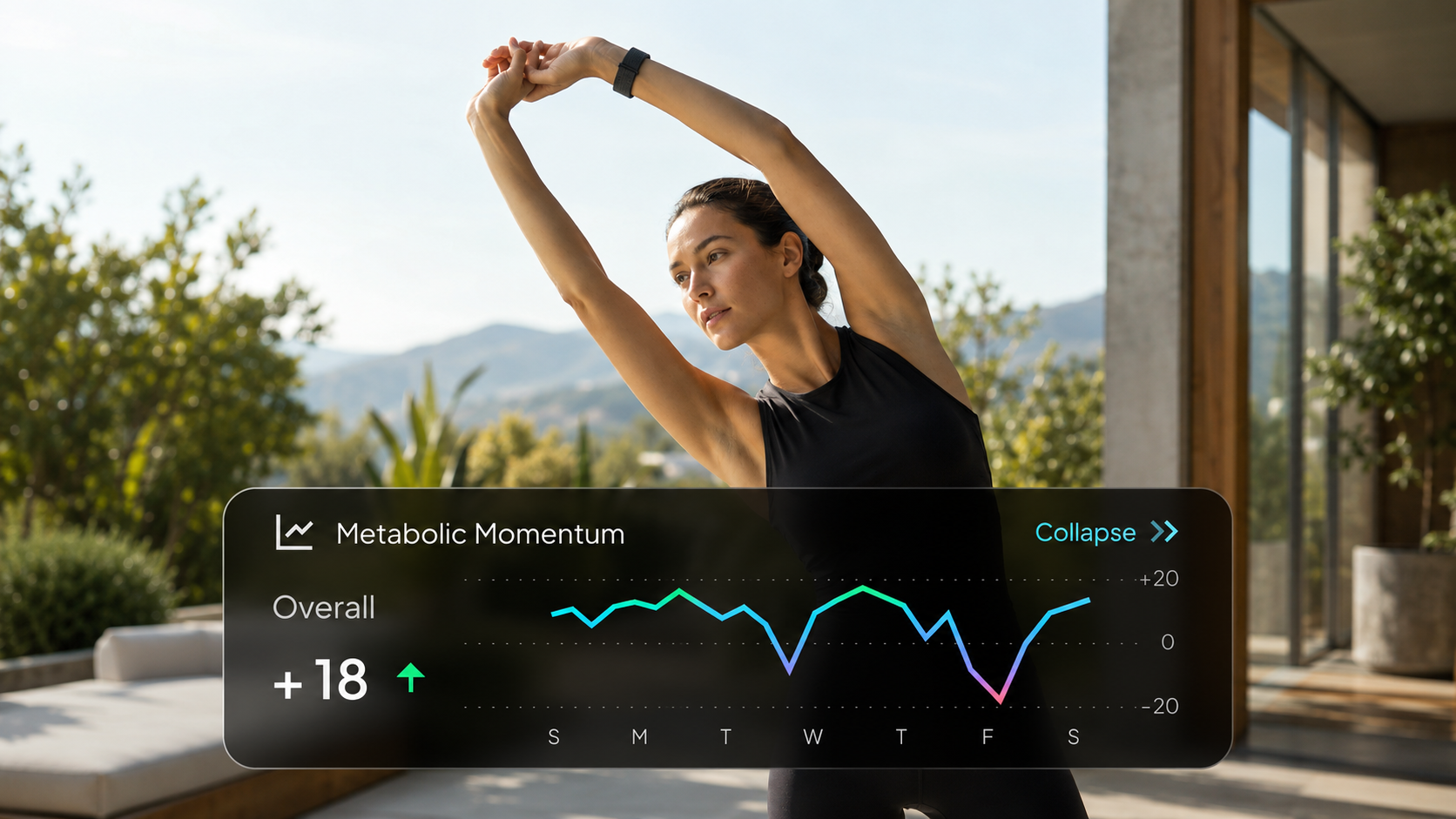
Hume's Chronic Illness Indicator looks for subtle changes in your recovery, heart resilience, and metabolic signals. When those patterns shift in unusual ways, it may suggest your body is under strain it does not normally carry, sometimes before you notice obvious symptoms yourself.
The purpose is awareness, not alarm. It surfaces a pattern that might otherwise be easy to overlook, and it can give you a concrete reason to check in with a healthcare professional sooner rather than later. Hume does not diagnose any condition and it is not a substitute for medical care. What it does is point your attention at a change worth asking about.
Why this matters: the most useful moment to notice a health change is early, while it is still a question rather than a problem. A band that watches your patterns continuously can catch a shift in the window where paying attention counts most
2.
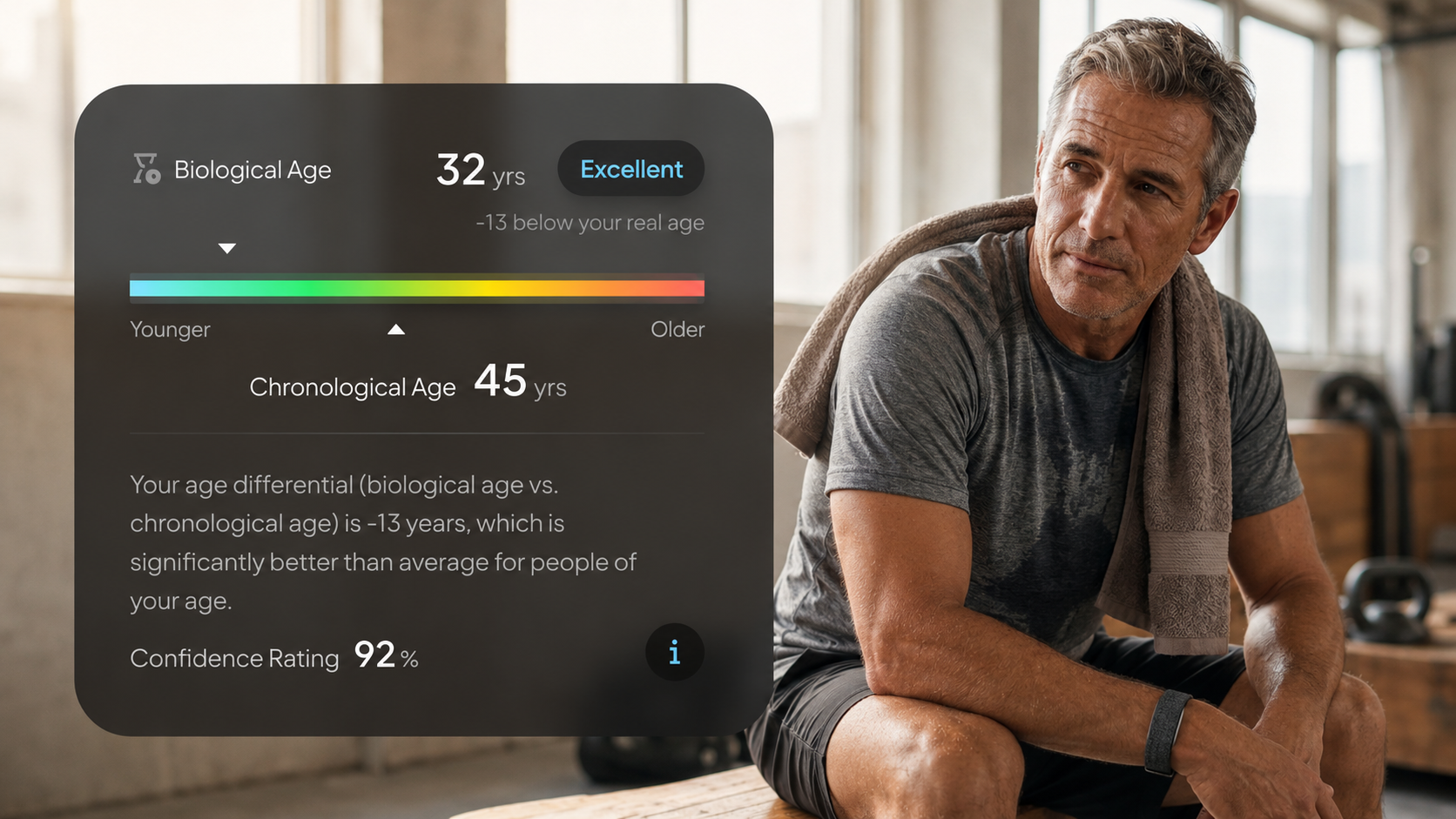
Hume Band 2.0 puts a biological age on the dashboard. Fitbit Air does not.
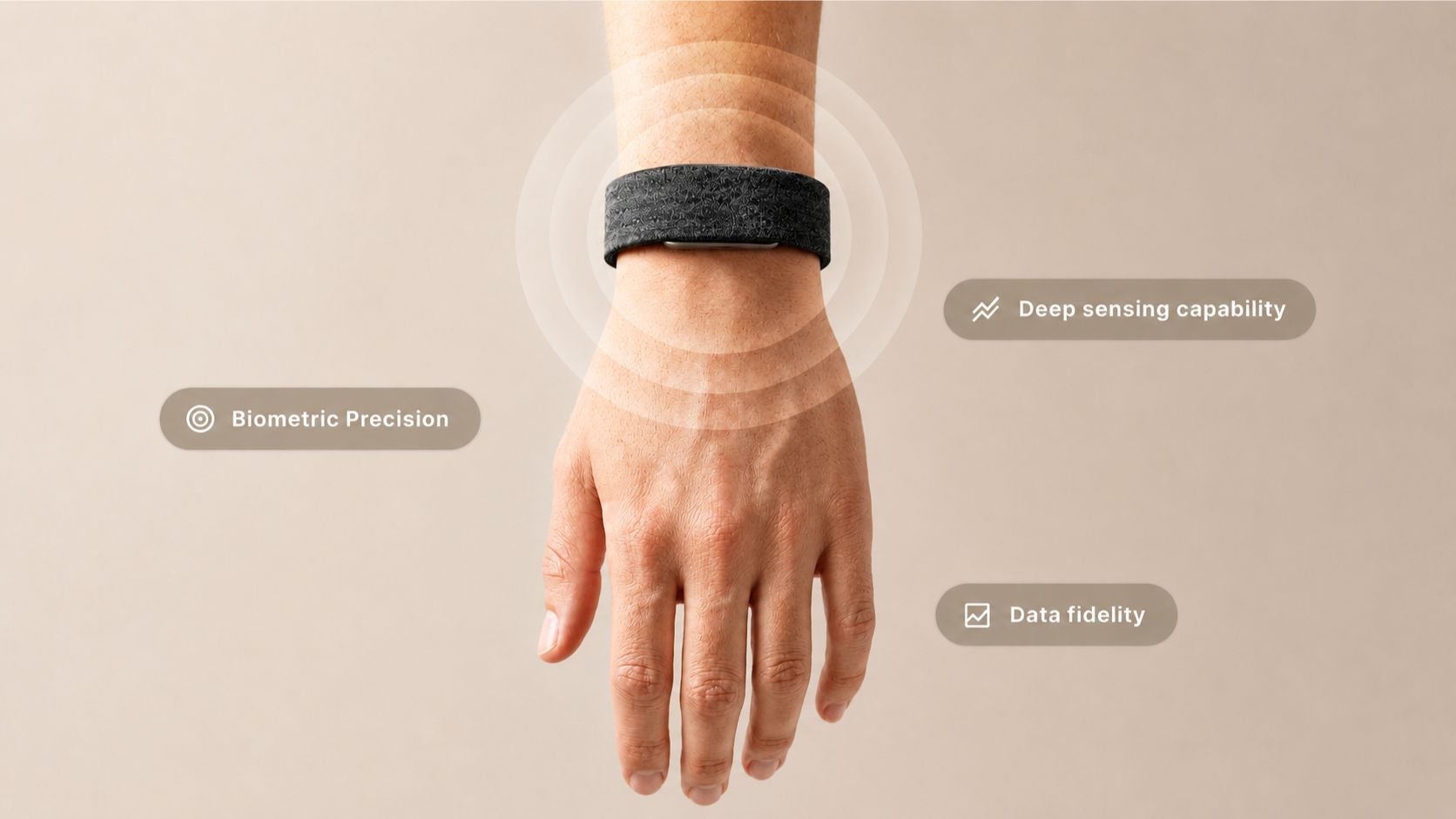
Biological age is the number most people want and almost no tracker will report. Two people born the same year can be aging at very different speeds, and the calendar hides it completely.
The pace of aging can be measured in living adults and that it diverges sharply from chronological age depending on how the body is treated over time.
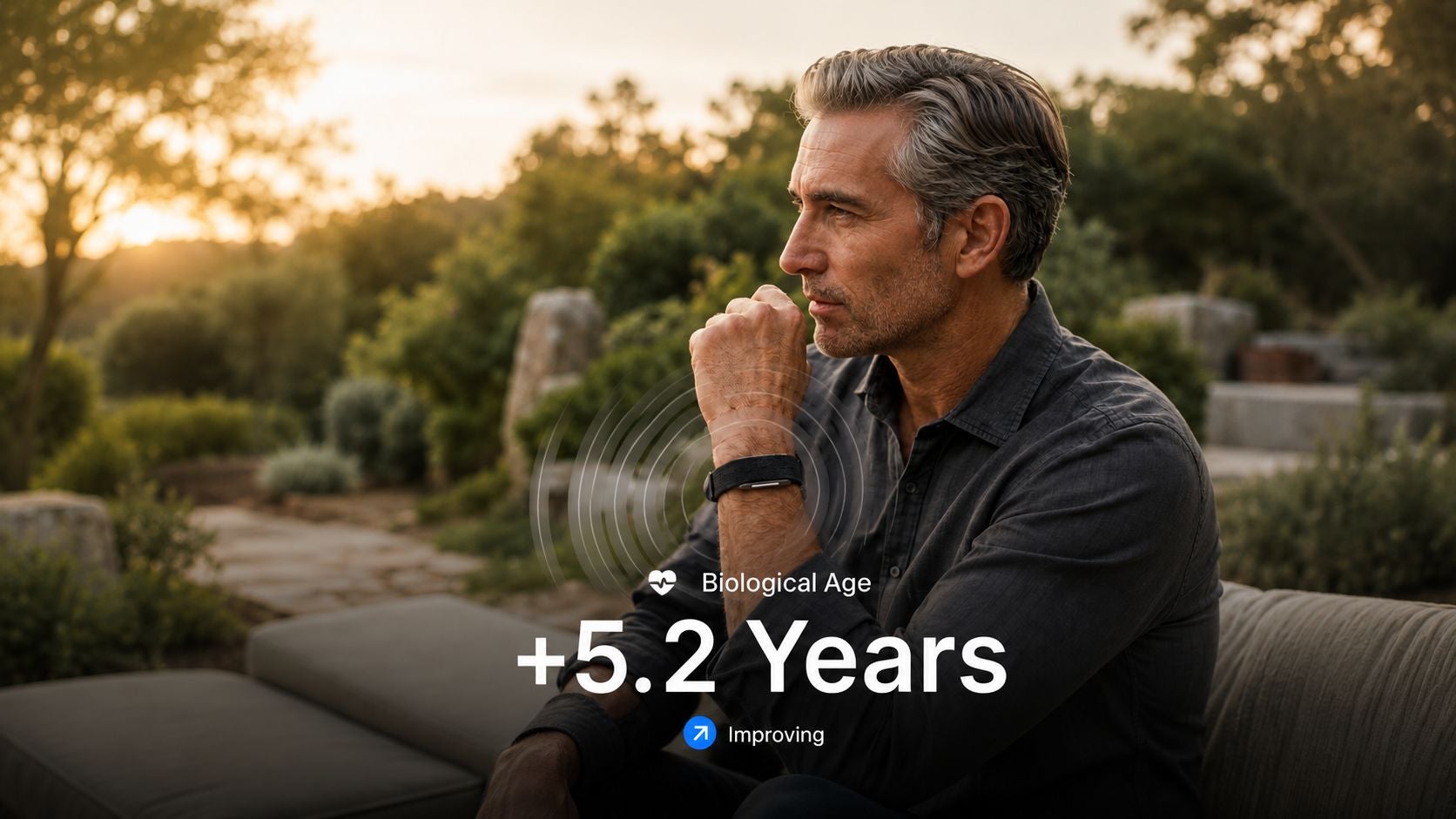
Hume Band 2.0 reports Biological Age and Pace of Aging directly in the app, rolling up sleep, stress load, movement, and recovery into one read of how the body is aging against the calendar. Pace of Aging is the live version of that number.
It shows whether the last stretch of habits has the clock running faster than one year per year or slower, week over week, so the trend is visible while there is still time to change it.
Fitbit Air reports the day. It logs last night's sleep stages and today's activity, and it does that cleanly. It does not convert those days into a single read of how fast you are aging.
Why this matters: A single HRV number tells you how your nervous system performed at its lowest point last night. A circadian HRV pattern tells you whether your autonomic function is stable or falling apart. One is a data point. The other is a diagnostic lens.
3.
Hume Band 2.0 builds a heart-resilience trend. Fitbit Air does not.
Both bands read heart rate and HRV continuously. A wrist sensor sampling around the clock can collect on the order of 86,400 heart-rate readings in a single day, a resolution no annual physical comes close to.
Hume Band 2.0 turns heart rate, HRV, and recovery patterns into Heart Resilience, a longevity-oriented read on cardiovascular efficiency and how well the autonomic nervous system recovers across time.
HRV itself is the readout of that autonomic balance: the small beat-to-beat variation that reflects how readily the body shifts between stress and recovery.
Tracked over months, a rising or falling resilience trend is a window onto cardiovascular health long before a resting number alone would move.
Fitbit Air uses the same raw stream to report resting heart rate, cardio load, and daily readiness. Those are training-and-recovery measures, answering whether you are ready to push today.
Why this matters: cardiovascular disease is the leading cause of death worldwide. A band that logs your resting heart rate and a band that tracks the direction of your cardiovascular efficiency over a year are doing fundamentally different work with the same sensor data. One records a number.
4.
Hume Band 2.0 treats SpO2 and skin temperature as core health metrics. Fitbit Air does not.
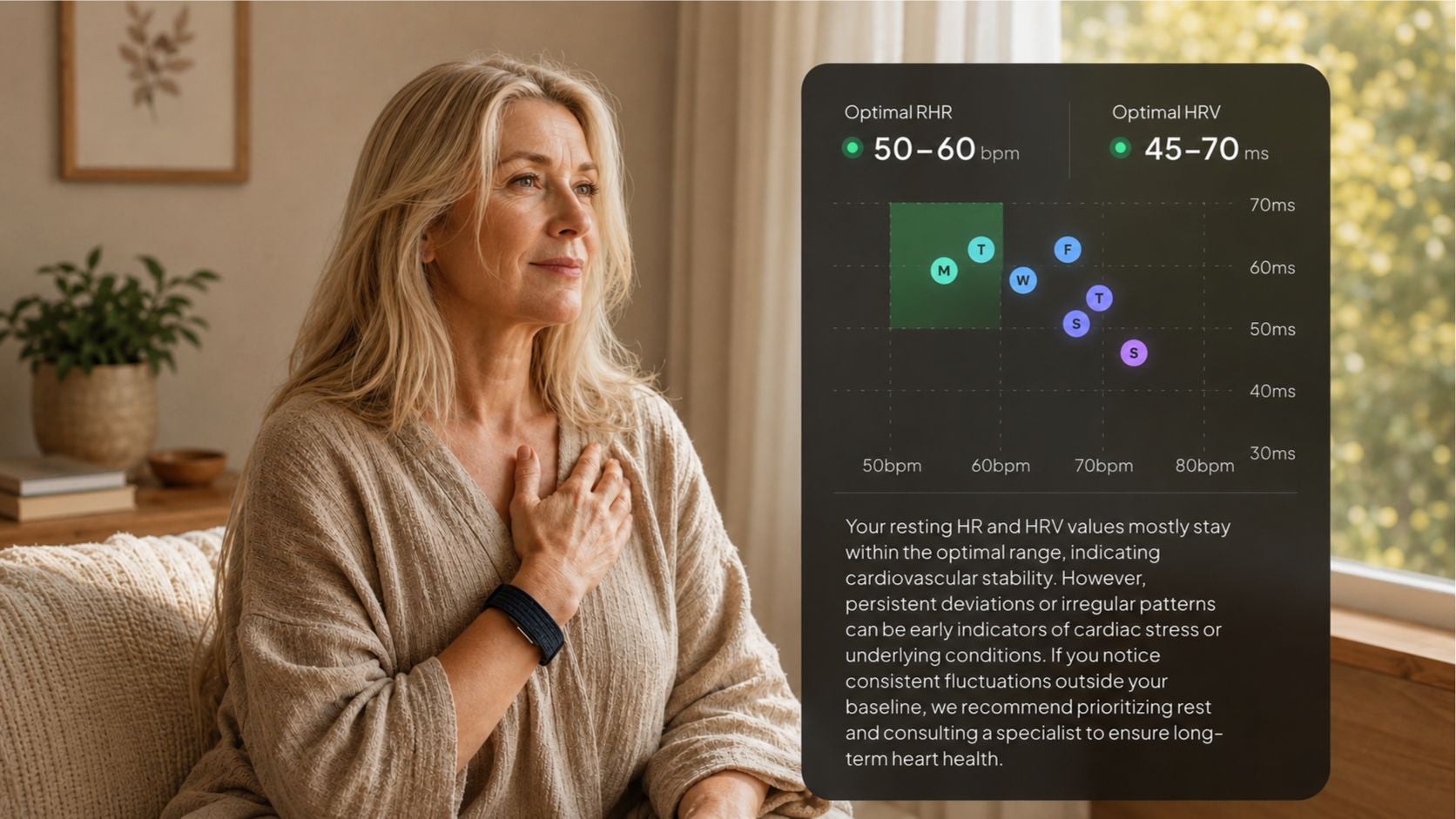
Blood oxygen and skin temperature are the two signals that catch a problem before you feel it. A repeated overnight dip in SpO2 can flag sleep-disordered breathing, respiratory strain, or trouble adjusting to altitude, often months before daytime symptoms appear.
Skin temperature is a similarly early tell: a sustained rise can precede a fever by a day, mark a shift in the menstrual cycle, signal incomplete recovery, or point to an inflammatory response the body has not yet announced.
Neither signal means anything from a single reading. Both mean a great deal once the band has learned your baseline and can spot the deviation.
Hume Band 2.0 reads SpO2 and skin temperature as continuous core metrics, including overnight consistency patterns, and folds both into the larger health picture rather than parking them in a sleep tab.
FitBit Air captures SpO2 and skin-temperature variation too, but primarily as sleep-time readings inside the Google Health app rather than as continuous trend signals positioned and surfaced the way Hume positions them. The sensor is present. The framing is built around the night, not around a running health baseline.
Why this matters: these are the signals that turn a wearable from a fitness gadget into an early warning system. They have nothing to do with how hard you trained. They are about catching a change in your body in the window before it becomes a problem, which is the only window where catching it early changes the outcome.
5.
Hume Band 2.0 gives you the core metrics free and lets you keep your data. Fitbit Air does not..
The Hume Health app is free with the band. The core health reads, Metabolic Capacity, Metabolic Momentum, Health Score, are included with no subscription and no paywall between you and your own physiology.
Hume Premium starts at $8.99 a month and layers on AI coaching and deeper longevity analysis for people who want a guide rather than a dashboard.
Fitbit Air runs without a paid plan for its basics too. But the richer layer, the Google Health Coach built with Gemini, the adaptive weekly plans, the proactive insights, sits inside Google Health Premium, which renews at $9.99 a month after a three-month trial. The device also requires a Google account simply to function.
Why this matters: with Hume, the health intelligence is foundational and free to read from the first day you put the band on. With Fitbit Air, the most useful guidance is a recurring $9.99 subscription attached to a Google login. The real question is not which app looks better. It is whether health intelligence is the thing you bought or an add-on you keep renting.
| Feature | Hume Band 2.0Top Pick | Fitbit |
|---|---|---|
| Longevity & Health Patterns | ||
| Metabolic Insight | Capacity + Momentum | Not a focus |
| Biological Age | Biological Age + Pace of Aging | Not offered |
| Cardiovascular View | Heart Resilience over time | Resting HR, HRV trends |
| Early Pattern Awareness | Chronic Illness Indicator | AFib rhythm alerts |
| Overall Health Score | Multi-biomarker Health Score | Daily readiness |
| Sensors & Signals | ||
| Heart Rate & HRV | Continuous | Continuous |
| SpO₂ | Continuous, overnight patterns | Tracked |
| Skin Temperature | Continuous trend | Variation tracked |
| Sleep Stages | Yes, mapped to recovery | Yes |
| Blood Pressure | Insights and trends | Not offered |
| Coaching & Access | ||
| AI Coach | Claude AI, Hume Premium | Gemini, Google Health Premium |
| Core Metrics | Free, no subscription | In Google Health app |
| Hardware | ||
| Price | $249 | $99.99 |
| Battery | Up to 14 days | Up to 7 days |
| Quick Charge | ~30 min to full | 5 min = 1 day |
| Water Resistance | IP68, 1m / 2hr | 50m |
Fitbit Air wins on price, weight, and water rating. Hume Band 2.0 wins on health depth: metabolic scoring, biological age, cardiovascular trend, and free access to the metrics that matter most over a lifetime.
Fitbit Air watches your days.
Hume Band 2.0 reads your years.
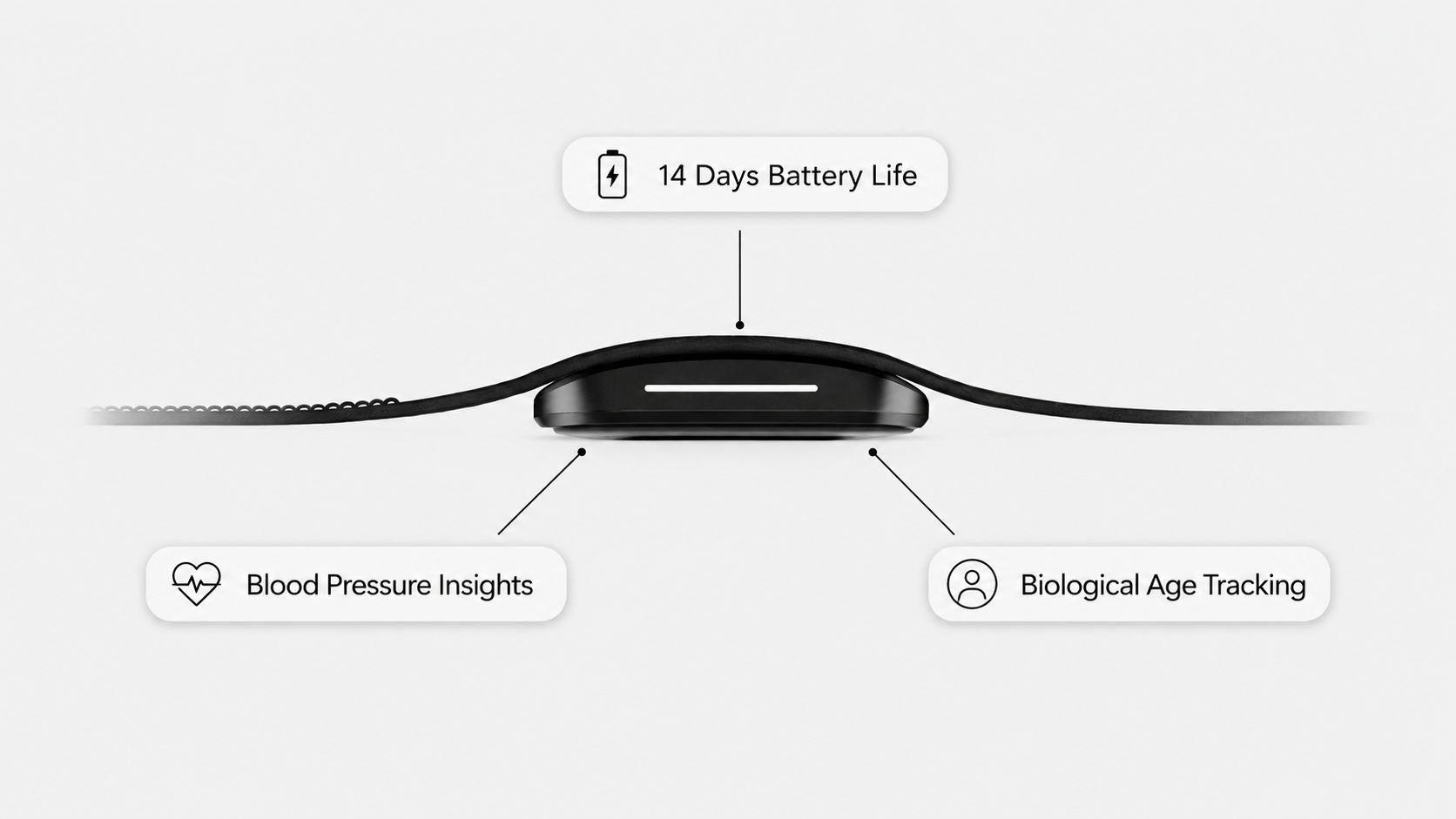
Fitbit Air runs up to 7 days per charge. Hume Band 2.0 runs roughly 14 days in regular use. Read the spec sheet alone and Fitbit wins the line.
Hume closes most of that gap from the other direction. A quick top-up reaches a full charge in about 30 minutes, so the time it takes to shower or finish a coffee is enough to cover another multi-day stretch of wear. The charging frequency goes up. Time spent tethered to a cable does not.
And the reason Hume draws more power is the whole argument of this page. Hume features AI coaching powered by Claude and longevity analysis such as Chronic illness indicator.
Continuous SpO2, continuous skin temperature, and frequent HRV sampling across the full day are the same sensors feeding Metabolic Capacity, Heart Resilience, and Biological Age, the reads Fitbit Air does not produce at any tier. A band that only counts steps and grades sleep does not need those sensors running constantly, so it sips power. The battery math is a direct tradeoff: charge a little more often, read a great deal more depth.
Two years into daily wear, the question stops being which app is prettier and becomes what you own outright. Fitbit Air runs on a mandatory Google account and routes its deepest guidance through Google Health Premium at $9.99 a month, which means both the data and the intelligence sit inside Google's ecosystem rather than yours.
Cancel the plan and the richest layer goes with it.
Your Health Data Shouldn't Come With a Monthly Subscription
After two years of daily tracking, what happens to your health data if you cancel your subscription? With WHOOP's model, feature access is tied to plan status. With Hume Band 2.0, the answer is simple: your data is yours. Always.
(Optional Hume Premium adds AI-powered coaching and deeper analysis at $8.99/month. But the core health intelligence? That's yours from day one)
The Bottom Line
Hume Band 2.0 Is a Health Tool.
If you want a light, inexpensive band to count steps, log workouts, and check last night's sleep, the Fitbit Air does exactly that at $99.99, weighs almost nothing, and holds a charge for two weeks. For an activity diary, it is a strong buy and this page will not pretend otherwise.
If the question keeping you up is whether your metabolic health is drifting, how your cardiovascular efficiency is trending, and how fast you are aging against the calendar, the Fitbit Air was not built to answer it. Hume Band 2.0 reads for that question from the same wrist sensors, interprets it through scores designed around longevity, and puts the answer in a free app from day one:
✅ Metabolic Capacity
✅ Metabolic Momentum
✅ Chronic illness indicator
✅ Biological Age
✅ Pace of Aging
✅ Heart Resilience
✅ Multi-biomarker Health Score
✅ Continuous SpO2
✅ Skin-temperature trend
All in the free app. All from day one.
Straight Answers to the Questions You're Probably Asking
"Fitbit Air is way cheaper. Why pay more?"
It is, at $99.99 against $249, and for counting steps that price is hard to argue with. The gap buys a different category of reading: Metabolic Capacity, Biological Age, and a cardiovascular efficiency trend that Fitbit Air does not produce at any subscription tier. You are not paying for a lighter step counter. You are paying for the interpretation layer that turns raw sensor data into a read on how your body is aging.
"Doesn't Fitbit Air already track SpO2 and skin temperature?"
It captures both, primarily as overnight readings inside Google Health. Hume Band 2.0 reads the same two signals continuously and as core metrics, including daytime patterns, then folds them into a running health baseline rather than a sleep summary. Same sensor type, a deeper and more constant use of it. The value is in the continuous baseline, which is what makes an early deviation visible.
"What does the Claude AI Health Coach really do?"
Available with a Premium membership, the Hume Health Coach uses Claude AI to help interpret your health patterns and offer personalised guidance. It connects the dots between your biomarkers, explains what they may mean, and suggests habits you might want to adjust. It is a guide for understanding your own data, not a doctor, and it does not give medical diagnoses.
"Does Fitbit Air have these health features too?"
Fitbit Air is a capable health tracker with heart rate, HRV, SpO2, skin temperature, sleep tracking, AFib alerts, and an optional Gemini-powered coach. The difference is framing: Fitbit Air is organised around everyday wellness, while Hume Band 2.0 is organised around longevity, aging, and long-term resilience. Same wrist, different purpose.
"What does the Claude AI Health Coach really do?"
Available with a Premium membership, the Hume Health Coach uses Claude AI to help interpret your health patterns and offer personalised guidance. It connects the dots between your biomarkers, explains what they may mean, and suggests habits you might want to adjust. It is a guide for understanding your own data, not a doctor, and it does not give medical diagnoses.
"Does Fitbit Air have these health features too?"
Fitbit Air is a capable health tracker with heart rate, HRV, SpO2, skin temperature, sleep tracking, AFib alerts, and an optional Gemini-powered coach. The difference is framing: Fitbit Air is organised around everyday wellness, while Hume Band 2.0 is organised around longevity, aging, and long-term resilience. Same wrist, different purpose.
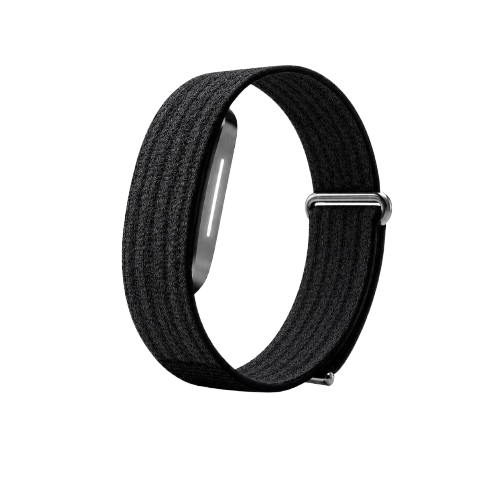
- 14 days battery life
- Free core app, core metrics included
- Optional premium at $8.99/mo
- 45-day satisfaction guarantee
This site is a free online resource that strives to offer helpful content and comparison features to its visitors. Please be advised that the operator of this site accepts advertising compensation from companies that appear on the site, and such compensation impacts the location and order in which the companies (and/or their products) are presented, and in some cases may also impact the rating that is assigned to them. To the extent that ratings appear on this site, such rating is determined by our subjective opinion and based on a methodology that aggregates our analysis of brand market share and reputation, each brand’s conversion rates, compensation paid to us and general consumer interest. Company listings on this page DO NOT imply endorsement. Except as expressly set forth in our Terms of Use, all representations and warranties regarding the information presented on this page are disclaimed. The information, including pricing, which appears on this site is subject to change at any time.
Copyright © 2026 - Hume Band Review
All Rights Reserved