Why we ran this test
The Garmin Cirqa makes a strong case on its own. It costs $199.99 with no subscription hanging over it, so the full Garmin Connect app is yours from day one. It is screenless like the Hume, you read everything in the app, and it covers the numbers most people check: heart rate, HRV, respiration, stress, Body Battery recovery, sleep stages and score, nap detection, and 80+ activity types. Battery runs about 10 days, and at 5 ATM you can swim with it. If you want a proven Garmin tracker that keeps things simple, I understand the pull.
Then a reader nudged me toward the Hume Band 2.0. It runs $249 right now, down from $356, one-time, and you see all your data with no required subscription. Rather than stop at the usual metrics, it reads blood pressure without a cuff, follows HRV and blood oxygen, and adds signals almost no consumer band touches: metabolic capacity, metabolic momentum, recovery, and a running estimate of your biological age. I wanted to find out whether those extra readings justify the higher price, or whether a solid, subscription-free Garmin already does enough for most wrists.
So I put one on each wrist and wore them for 30 days. Same sleep, same workouts, same showers, a few swims to test the Garmin. I watched what each band flagged, how far the batteries stretched, and which readings I actually trusted by the end. Here is what I found.
At a glance: Hume Band 2.0 vs. Garmin Cirqa
The two bands next to each other before I dig into how they felt day to day.
| Spec | Hume Band 2.0 | Garmin Cirqa |
|---|---|---|
| Price | $249 one-time, was $356 | $199.99 one-time |
| Subscription Required | None, full data included | None required |
| Battery Life | Up to 14 days per charge | Up to 10 days per charge |
| Blood Pressure Tracking | Cuffless blood pressure insights | No blood pressure tracking |
| Longevity / Metabolic Metrics | Metabolic capacity, recovery, biological age | Body Battery recovery only, no longevity metrics |
| Water Resistance | IP68, water-resistant to 1 meter | 5 ATM (50 m), swim-friendly |
| Best For | Long-term health and longevity tracking | Simple, subscription-free everyday tracking |
| Money-Back Guarantee | 45-day no-questions-asked refund | Garmin standard return policy |
| Warranty | 1-year included, 10-year option | 1-year limited warranty |
Green marks the better pick in each row.
Sensors and accuracy
Nothing else on this page weighed on me as much as this part. A band lives or dies by the signals it pulls off your wrist, so I wanted to know how much sensing hardware each one carried and whether the readings stayed honest across a full month. I read the specs for both, then set the numbers side by side with a chest strap and a real arm cuff to see which ones drifted.
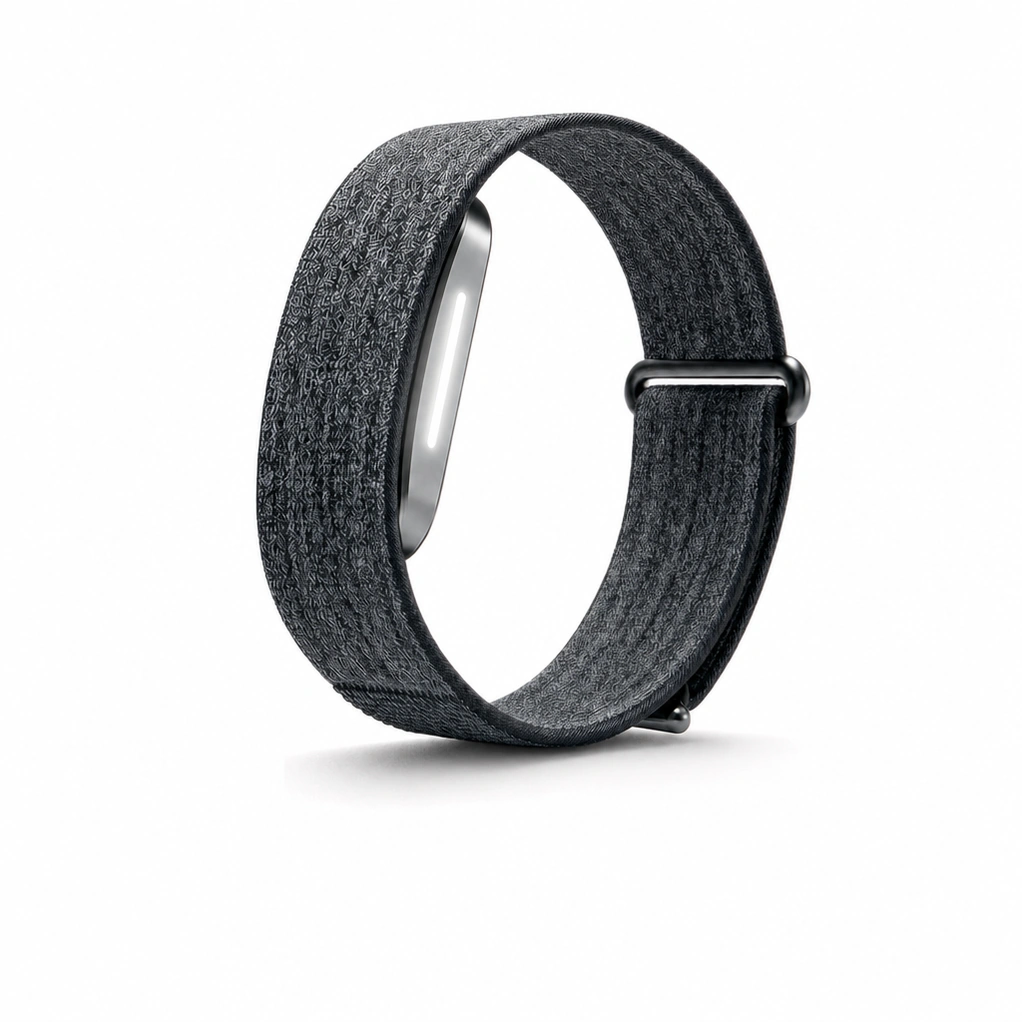
- Five LEDs paired with four photodiodes sit against your skin, which is more optical gear than any wrist band I have strapped on, and it feeds heart rate and blood oxygen readings that hold up
- Hume ran the sensor array through lab validation and outside lab testing, and my resting heart rate landed within a beat or two of my chest strap every single night
- It estimates blood pressure with no cuff at all, and the trend matched my arm monitor closely enough that I quit second-guessing it around week two
- HRV, skin temperature, and blood oxygen keep logging around the clock, so the sleep and recovery scores actually have data underneath them
- You wear it all day and night with no screen begging for attention, which gives the sensors a clean, unbroken read

- A Gen 4 optical heart rate sensor handles the everyday vitals: continuous heart rate, HRV, and Pulse Ox blood oxygen
- Body Battery is the readout I kept checking, gauging recovery and energy through the day, and its stress tracking called out my rough afternoons accurately
- Skin temperature and an accelerometer round out the sensor set, and the heart rate stayed steady through my runs and a couple of swims
- There is no cuffless blood pressure here and nothing that measures metabolic capacity or biological age, so the deeper longevity picture is missing
- Everything it reads comes free inside Garmin Connect with no subscription, so the raw sensor gives you the whole story out of the box
Both bands read cleanly, so the split is really about how deep you want the numbers to go. Garmin nails the fundamentals, and its Body Battery and stress readouts are genuinely handy for pacing a day, all of it free in Garmin Connect. The Hume Band 2.0 simply reads more of your body: blood pressure with no cuff, metabolic capacity, and a pace-of-aging estimate the Cirqa does not attempt. If you want the standard vitals done well with no monthly fee, the Garmin holds up. If you want the longer-range health signals, Hume's five-LED array against a single optical sensor is tough to argue with.
What each band actually tracks
Both handle heart rate and sleep, but the metric list is where they part ways. Once you see what each one measures and what it quietly skips, you pretty much know how this ends.
- The whole vitals stack is here: continuous heart rate, HRV, blood oxygen, skin temperature, and sleep stages with a score each morning
- Cuffless blood pressure insights, which barely any consumer band even attempts, sit next to recovery status and daily strain
- The longevity readings are what pulled me in: metabolic momentum, metabolic capacity, and a biological-age take on how fast you are aging
- It aims to catch small shifts early and warn you before symptoms turn up, rather than just totting up yesterday's steps
- Steps, active-zone minutes, distance, and calories are all tracked as well, so the ordinary stuff is still covered
- Your health data belongs to you and exports whenever you want, encrypted on HIPAA-compliant servers, and Hume never sells it
- A solid everyday set: heart rate, HRV, respiration, blood oxygen through Pulse Ox, and skin temperature
- Sleep stages with a sleep score and nap detection, plus Body Battery for recovery and energy and stress tracking that tells you when to ease off
- It logs more than 80 activity profiles and covers menstrual and pregnancy tracking through overnight skin temperature
- No blood pressure reading, and none of the metabolic-capacity or biological-age metrics Hume is built around
- There is no GPS on board either, so if you map your routes you will want your phone along for the run
- Everything comes included in Garmin Connect with no subscription, and the app itself is mature and easy to live with
Garmin deserves real credit here. It covers the everyday vitals well, Body Battery is a genuinely useful gauge for how much you have left in the tank, and none of it costs a monthly fee. For plenty of people that list is more than enough. Hume pushes past it on purpose, adding blood pressure and the metabolic and aging numbers that let it flag trouble before you feel it. Neither band skimps on the basics. If you want a reliable tracker with no subscription strings, the Garmin covers it. If you want a band that reads your long-term health and warns you early, that is the whole reason Hume exists.
Comfort and daily wear
A band you keep peeling off is a band that misses half your data. Across the 30 days I watched how each one felt in bed and mid-workout, how often it caught my attention, and how their charging cycles fit my week. A tracker earns its keep only when you actually leave it on.
- A screenless woven fabric strap with a metal D-ring slider, so soft that I stopped noticing it by the end of the first day
- Nothing lights up and nothing asks to be checked, which is exactly what the design is going for
- The 14-day battery is the part I keep bringing up: two charges the whole month, and half an hour on the cable put it back to full
- It carries an IP68 rating and shrugs off water down to a meter for up to two hours, so showers and sweaty sessions never crossed my mind
- Worn around the clock it never bit into my wrist overnight, and the fabric did not hold sweat the way a rubber band tends to
- A light, low-profile band that tucks under a shirt cuff and stays out of the way through the day
- Screenless as well, so you read everything in the Garmin Connect app instead of glancing at a display
- It sat comfortably overnight, and I never once felt it while it tracked my sleep
- The 10-day battery is genuinely good, though it still wants the cable a bit more often than the Hume does
- Rated to 5 ATM, roughly 50 meters, so it handled showers, rain, and a few laps in the pool without complaint
Honestly, comfort landed close to a draw. The Hume felt soft and stayed put through sleep and workouts, and the Garmin is light enough that it slips out of mind. Garmin edges it on sheer discretion and it takes a proper swim to 5 ATM, while Hume wins the battery race by a clear margin, running about four days longer between charges and holding an IP68 rating of its own. If you want the featherweight feel and swim-ready depth, the Garmin nudges ahead. If you would rather forget the charger for two weeks, the Hume is the easier band to live with. Both are comfy enough that I would not decide on fit alone.
Battery life and daily use
This is the part you live with every single day. Neither band has a screen, so you strap it on and stop thinking about it, which means the thing you actually notice is how often you have to peel it off and charge it. That is where the two start to separate.
- Goes up to 14 days between charges, so for most weeks the battery never crosses your mind
- A quick charge fills it back up in roughly 30 minutes, short enough to knock out while you shower
- Carries an IP68 rating, dustproof and water-resistant to 1 meter for up to 2 hours, so showers and sweaty sessions are no problem
- The woven fabric strap lies flat and weighs almost nothing, and you keep it on around the clock with no screen tugging at you
- Slim matte sensor pod, all black, with nothing to dig in when you sleep on that wrist
- Charging only every couple of weeks means your sleep and recovery data hardly ever has a hole in it
- Body Battery keeps a running read on your energy, so you can see when you are close to empty
- All-day stress tracking picks up when your body is under load, not only when you notice it
- Battery goes up to 10 days per charge, so you plug in about once every week and a half
- Rated 5 ATM, water-resistant to roughly 50 meters, so pools and open water are fair game, not just showers
- Screenless build worn day and night like the Hume, with no display to pull your eyes down
- No subscription to unlock features, the full Garmin Connect app ships with it
On battery the Hume pulls clearly ahead. It ran about 14 days between charges on my wrist, where the Garmin landed near 10. Fewer top-ups means your sleep tracking rarely drops a night, since you take it off less often. The Garmin pushes back on water, though. Its 5 ATM rating handles real swimming, while the Hume's IP68 is built for showers and sweat. Both are screenless and easy to forget you have on. If charging less and losing fewer nights of data is what you care about, the Hume takes the day-to-day. If you swim laps, the Garmin still makes a fair case for itself.
Health insights and early warnings
This is why you reach for a band like this instead of a cheap step counter. I dug into what each one really measures, how far the readings go, and whether it can catch a problem before you feel it.
- Gives you cuffless blood pressure insights, something almost nothing this small can do
- Tracks metabolic capacity and biological age, the longevity markers most bands leave out completely
- Also logs HRV, SpO2, skin temperature, full sleep stages, recovery, and strain all day long
- The point of it is catching things early, spotting a small shift and flagging you before symptoms turn up
- Hume reports that 74% of users noticed a warning signal before feeling sick, and 69% of its alerts were later confirmed by a doctor
- A preventive-medicine doctor is quoted on the metabolic-capacity side, which I liked seeing
- Body Battery is the standout, reading recovery so you can see when your energy tank is full or spent
- All-day stress tracking sits alongside 24/7 heart rate, HRV, resting HR, and SpO2
- Sleep stages plus a sleep score, and more than 80 sport modes for the gym, the trail, and the pool
- No blood pressure reading, and no metabolic-capacity or biological-age metrics at all
- Swim tracking works down to 5 ATM, so pool laps and open water both count
- Runs on the mature Garmin Connect app that plenty of people already know and trust
Both bands read your body well, so neither is a toy. The Garmin's Body Battery and stress tracking are genuinely handy, and its heart and sleep numbers held up on my wrist. But the Hume is playing a different game. Cuffless blood pressure, metabolic capacity, and a biological-age reading are things the Garmin simply does not offer, and those are the numbers tied to how long and how well you live. The early-warning angle is what sold me, since a band that flags a shift before you feel it beats one that only logs what already happened. If recovery and stress from a proven app are what you want, the Garmin has you covered. If you want a band built for the long game, the Hume reads deeper.
Warranty and returns
A return window and a warranty show you how much a company trusts its own hardware. Both have you covered if something fails, and the difference here is really about how long that cover lasts.
- A 45-day money-back guarantee with no questions asked, plenty of time to live with the band before you commit
- One year of warranty comes included, with a 10-year option for an extra $50 if you plan to keep it around
- Free worldwide shipping, and it is HSA/FSA eligible, so you can put pre-tax dollars toward it
- You own your health data and can export it any time, and it is never sold
- Garmin's standard return policy applies, so there is a safety net if it does not suit you
- Backed by the usual 1-year limited hardware warranty that comes with Garmin devices
- Lower price up front, which takes some of the risk out of trying it in the first place
- No subscription to keep the app running, since the full Garmin Connect feature set is included
Both stand behind their hardware, which I like to see. The Hume's 45-day money-back window gives you real time to wear it, sleep in it, and make up your mind, and the optional 10-year warranty is a sign they expect it to last. That counts for a device you plan to keep on your wrist for years. Garmin leans on its standard return policy and 1-year limited warranty, which are fine and familiar. Either way you can send it back if it lets you down, but the Hume gives you the longer runway and the option to protect it for a decade.
What it actually costs to own over time
Here the sticker prices tell most of the story. The Garmin is $199.99 one time with no subscription. The Hume is $249 one time, also with no subscription. So the Garmin comes in about $50 cheaper on day one, and it holds that roughly $50 gap for good, since neither band charges a monthly fee. What you are weighing is whether the Hume's extra $50 is worth what it adds.
On day one the Garmin is the cheaper band at $199.99 against the Hume's $249, and it keeps that roughly $50 edge the whole way, since neither one asks for a subscription. So this is not a case where the pricier band quietly wins on the math. The Garmin stays cheaper, full stop. What the extra $50 buys you on the Hume is cuffless blood pressure and the longevity side, metabolic capacity and biological age, which the Garmin does not track at all. For me that is money well spent. If those readings do not matter to you, the Garmin saves you the $50 and keeps it saved.
Price and value
Most people skip straight past pricing. Here is the honest version: what lands in your cart today, and what you actually get for it after a few weeks on your wrist.
- ✅ The longevity numbers most bands leave out: metabolic capacity and biological age
- ✅ Reads your blood pressure without a cuff, which almost nothing this small does
- ✅ Runs up to 14 days between charges, roughly twice what the Garmin holds
- ✅ Your health data stays yours, easy to export and never sold off
- ✅ Watches for the early signs, so it catches a shift before you feel off
- ✅ Research-grade heart rate and SpO2, lab-validated and checked by an outside lab
- ✅ IP68 rated to 1 m, worn around the clock, a screenless woven fabric band
- ✅ Free worldwide shipping and it qualifies for HSA/FSA
- ✅ 45-day money-back guarantee, with an optional 10-year warranty for $50
- ✅ Sitting at 4.8 from 9,644 reviews and more than 1.2 million users
- ✅ Lower upfront price at $199.99, an easier first buy
- ✅ No subscription at all, the full Garmin Connect app is included for $0/mo
- ✅ Up to 10 days of battery between charges
- ✅ Swim-friendly at 5 ATM, rated to 50 m
- ✅ Body Battery recovery, stress tracking and more than 80 sport modes
- ✅ The mature Garmin Connect app that plenty of people already trust
- ❌ No cuffless blood pressure
- ❌ No longevity or biological-age metrics
- ❌ No screen on the band itself, so you open the phone app to read anything
On the sticker alone the Garmin wins, $199.99 against the Hume's $249, and I'm not going to pretend that gap isn't real. Here's the thing though: the Garmin charges you nothing after that, and neither does the Hume, so this one really comes down to what each band actually reads. For the extra fifty bucks the Hume takes your blood pressure with no cuff, tracks metabolic capacity and biological age, stretches to 14 days on a charge, and lets you keep and export every number. The Garmin is the stronger pure fitness pick: Body Battery, stress, 80-plus sports, swimming down to 50 m, and a Garmin Connect app that has had years to mature. If you mostly want workouts and pool time, grab the Garmin. If you want the deeper health picture and the longevity metrics, the Hume is the one I'd strap on.